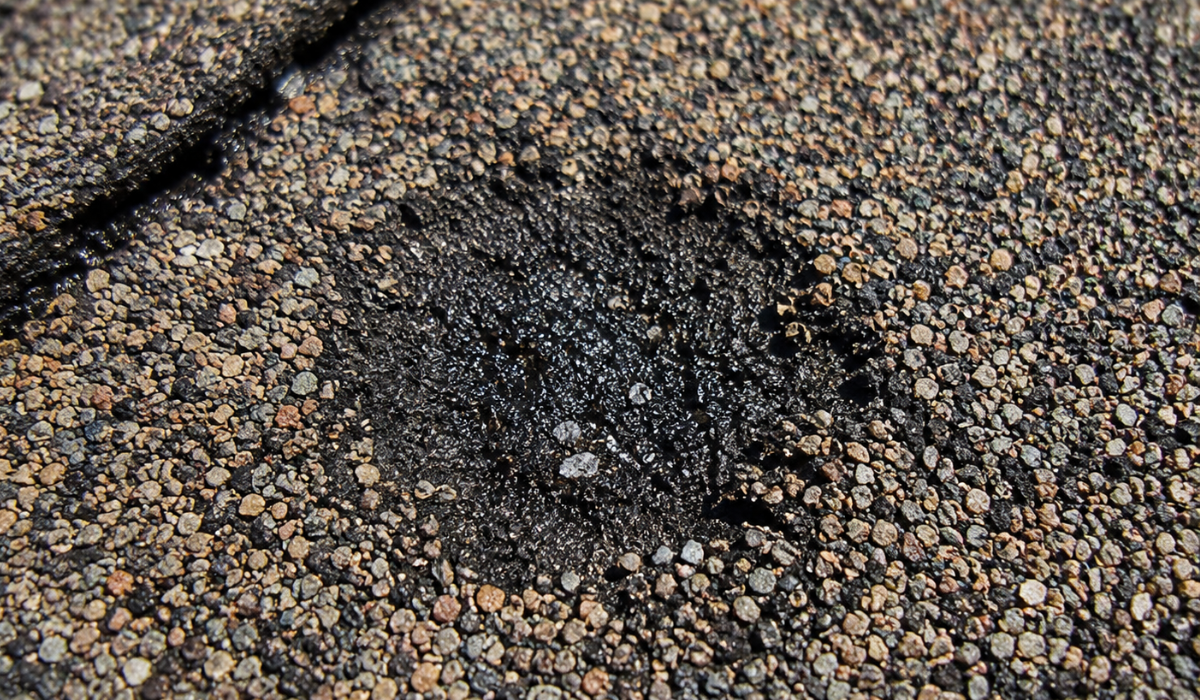

After a hailstorm, the most expensive mistake a homeowner can make is assuming the roof is fine because nothing is leaking. Hail damage to a roof is often invisible from the ground and quiet for months — and then it isn’t. This is a plain-English guide to what hail actually does, how to check yours correctly, and how to make a calm, informed decision afterward. It comes from two people who’ve spent about three decades on Twin Cities roofs: master roofer Lewis May and master carpenter Josh Kujawa.
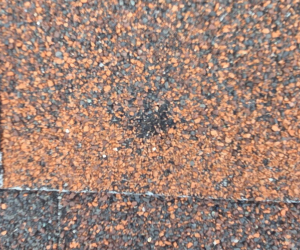
An asphalt shingle has a layer of small mineral granules on top. Those granules are the roof’s sunscreen — they shield the asphalt underneath from UV and weather. When hail strikes, two things can happen, and neither one has to leave an obvious hole:
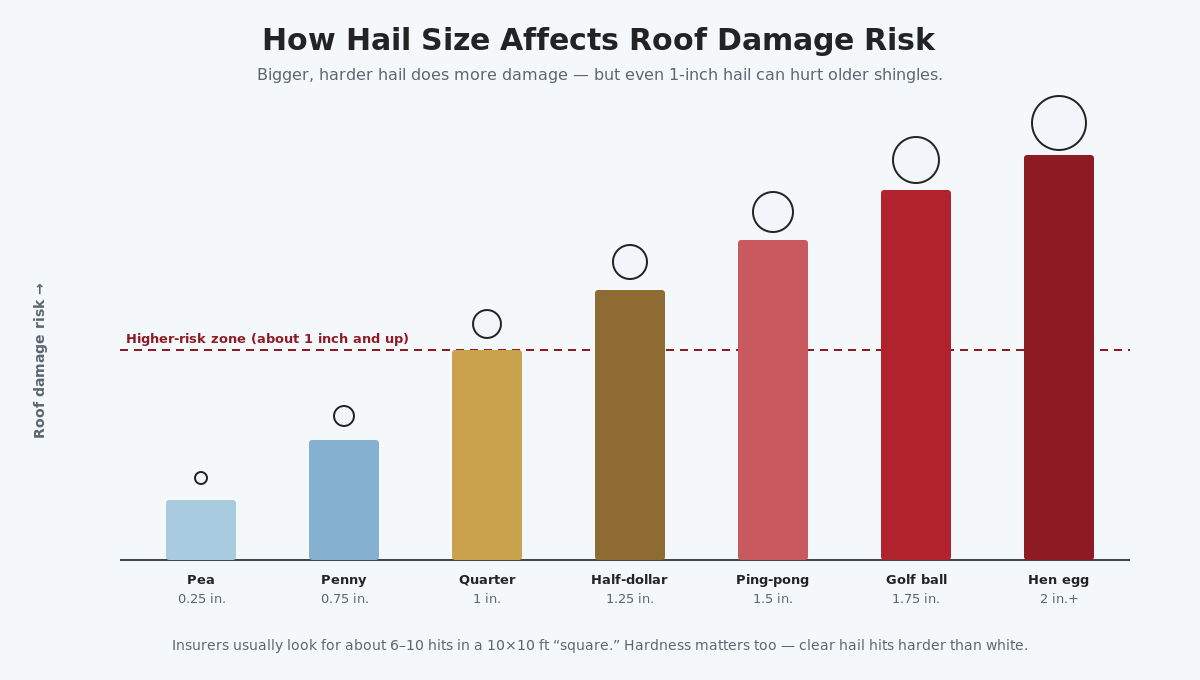
Two factors decide how much harm a storm does: size and hardness.
A bigger stone carries more energy, but hardness matters just as much. Clear hail is harder than white hail and tends to implode on impact, bruising the surface, while softer hail can bounce off. That’s why two storms with the “same” hail size can leave very different roofs behind.
Roof variables matter too. Age, the manufacturer, and how malleable or brittle the shingles have become all change the picture. Older, brittle, steep, or shaded roofs tend to take hail harder than newer, more flexible ones. There’s no single rule — which is exactly why a real inspection beats a guess.
People assume it takes a dramatic, golf-ball storm to hurt a roof. Sometimes a smaller storm does it; sometimes a big one barely does. As a rule of thumb on the insurance side, most carriers look for roughly 6 to 10 hits within a 10-by-10-foot area (one “square”) before they’ll consider the slope damaged enough to claim.
Here’s how unpredictable that threshold is in practice. We’ve gone up on roofs we installed three years ago and found only a hit or two — not enough to claim. And we’ve gone up on a roof from 2019 we didn’t expect to find anything on, and there was enough damage to recommend calling the adjuster. The roof tells the truth; assumptions don’t.
This is the part homeowners most need to hear: you cannot reliably see hail damage to a roof from the ground, and it’s tough to spot even with a drone. A trained eye can sometimes catch signs from below, but no honest roofer will declare your roof undamaged — or damaged — based on a look from the yard.
When we inspect, we go up with a ladder, find the bruised and granule-loss spots by hand and eye, and circle each one in chalk so it shows up clearly in the photographs. That documentation is what turns “I think there might be damage” into something you and your insurer can actually see.
So when someone tells you “I looked, everything seems fine,” the accurate version is: nothing’s obvious from down here. Your shingles can be compromised even when every vent and visible surface looks untouched.
The roof is the headline, but hail leaves a trail of evidence around the property that’s easier to spot — and useful to document:
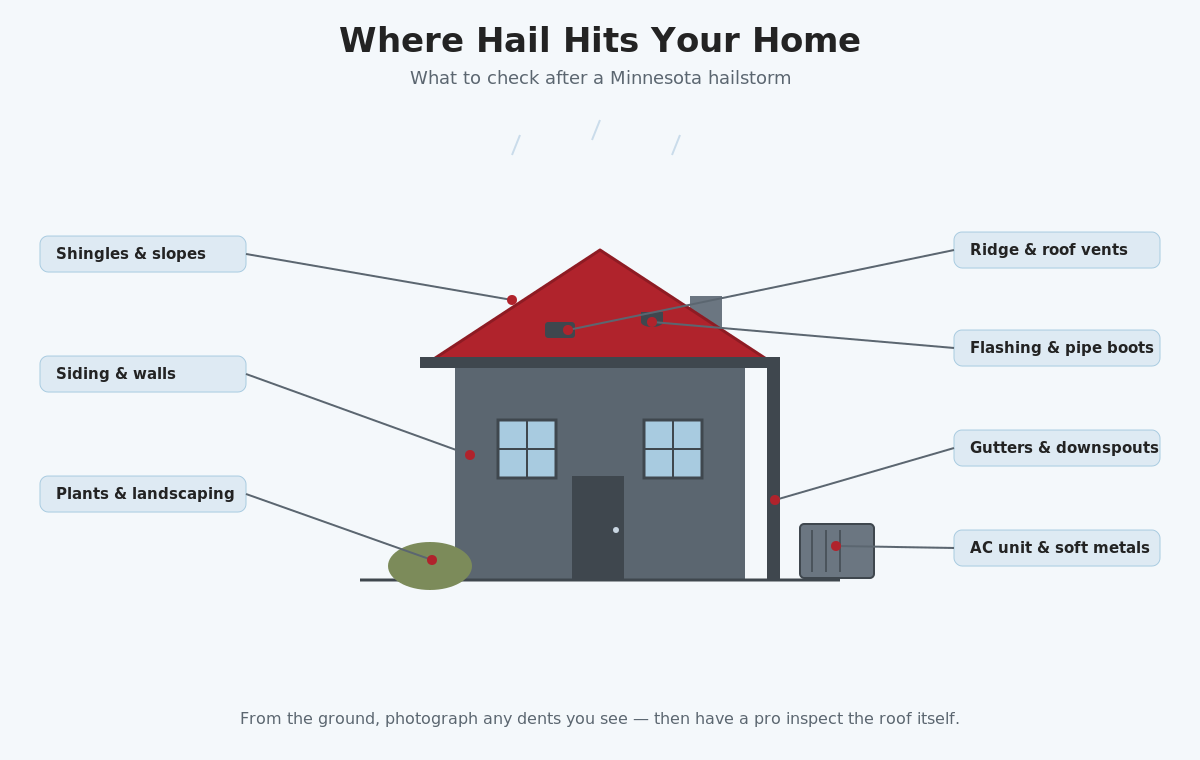
If you found dents in your gutters or your garden looks like it lost a fight, that’s a strong signal the roof deserves a closer look.
Do:
Don’t:
A roof can look okay in June and tell a different story by the next spring. Once hail knocks granules loose and bruises the mat, sun, heat, and Minnesota’s freeze-thaw cycles keep working on those weak spots. The first warning signs of trouble are usually around vents, pipe boots, skylights, and flashing, followed by interior clues — ceiling stains, attic moisture, granules collecting in the gutters. Even without an immediate leak, hail can shorten a roof’s usable life and complicate resale or future coverage. Catching it early keeps your options open.
Not every hail-touched roof needs to be torn off tomorrow. If a roof has scattered hits but not enough to claim, replacement usually isn’t urgent. Targeted shingle repairs — going up and correctly replacing the affected shingles — are reasonable, ideally done when it’s not blazing hot out so the shingles separate and reseal correctly. It’s typically not critical (it won’t leak next week), but it’s worth doing in time.
When damage is widespread, replacement becomes the sound call. If you’re replacing, it’s worth asking about Class 4 (impact-resistant) shingles. They hold up to hail far better than standard Class 3 products, and many insurers offer a premium discount for installing them. With Minnesota’s hail seasons — and with insurers tightening coverage — that upgrade increasingly pays for itself.
We’ll walk you through the trade-offs in plain terms; we won’t push you toward a tear-off you don’t need. We work primarily with Owens Corning, GAF, and CertainTeed shingles, and we’ll match the product to your home and goals rather than to a sales quota.
After a storm, the door-knocks, texts, and flyers start. A few honest filters:
A trustworthy inspection is a serious conversation with someone who actually goes up on the roof, explains what they found, and is honest about when you shouldn’t file a claim — so you can make your own informed decision based on your situation and your risk tolerance.
Hail damage to a roof is real, it’s often invisible from the ground, and it doesn’t wait for a leak to start costing you. The right response isn’t panic and it isn’t denial — it’s due diligence. Have someone who knows roofs take a real look, get clear documentation either way, and decide from there.
Not sure whether the last storm touched your roof? Right Away Construction offers a free, no-pressure roof inspection across the Twin Cities. We go up with a ladder, document what we find, circle it in chalk for the photos, and tell you the truth — including when you don’t need a new roof. Call 612-255-9605 or visit rightawayco.com. Local crews, start to finish. MN #BC630708. Done the right way. Right away.
Call 612-255-9605 or visit rightawayco.com. Local crews, start to finish. MN #BC630708. Done the right way. Right away.
Live through a recent storm? See Hailstorm in Saint Anthony: Here’s What Really Happened. Thinking about a claim? Read Filing a Hail Damage Roof Insurance Claim in Minnesota.