
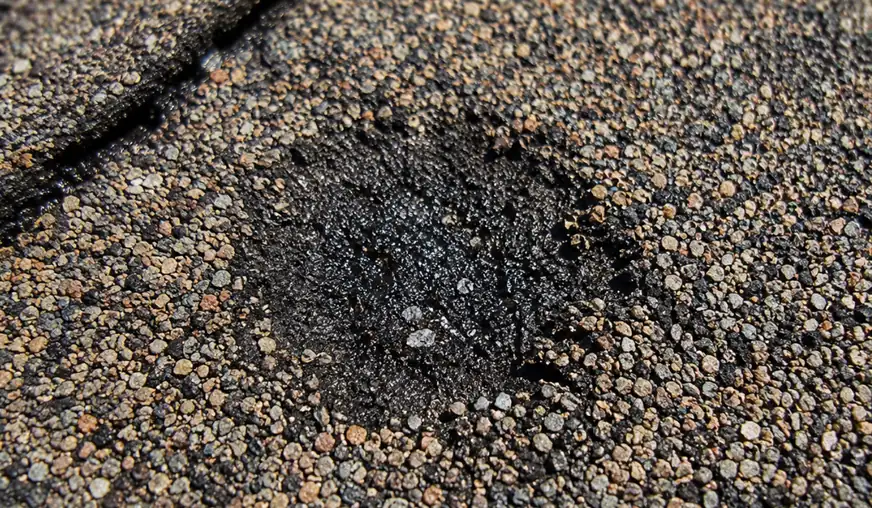
On the evening of Friday, June 19, 2026, a tight, fast-moving hailstorm swept across the north metro of Minneapolis. It dropped hail from Saint Anthony to north St. Paul. This wasn't a sky-wide event. It was a narrow, hard-hitting cell: the kind that pounds one block and leaves the next one untouched. If you live in Saint Anthony or nearby and felt this Minneapolis hailstorm come through, here's a straight account of what happened, what it did, and the calm next step worth taking.
What happened in the June 19 Minneapolis hailstorm
According to the National Weather Service, scattered storms formed over central Minnesota and tracked southeast into the Minneapolis metro. One compact cell developed near the Meeker, Wright, and Stearns county line. It moved into the northwestern Twin Cities, peaked in intensity near I-694 and Highway 36, then crossed I-94 into the east metro. The Minnesota DNR described half-dollar to golf-ball-size hail battering northeastern Minneapolis, Columbia Heights, Fridley, Shoreview, Roseville, northern and eastern St. Paul, Maplewood, and Woodbury. The NWS noted reports of two-inch-plus hail near northern St. Paul. Some spots took hail for more than ten minutes straight.
Preliminary Storm Prediction Center reports show a cluster of hail near Corcoran, Brooklyn Park, Brooklyn Center, Fridley, Columbia Heights, Roseville, Falcon Heights, Little Canada, Maplewood, Oakdale, and north St. Paul. Reported stone sizes ran from one inch (quarter-size) up to about 2.25 inches. The storm also knocked out power widely; local outlets reported more than 25,000 homes without power at the height of it.
A quick, honest note on Saint Anthony specifically: the official reports didn't print a line item with our city's name on it. But Saint Anthony sits right in the middle of the named, hardest-hit communities: northeast Minneapolis, Columbia Heights, Fridley, Roseville, Falcon Heights, and Little Canada. The corridor ran straight through the neighborhood. So this was very much a Saint Anthony-area storm, even if the data tags the cities around it.
What our team saw after the Minneapolis hailstorm
Our manager and master roofer, Lewis May, and our president and master carpenter, Josh Kujawa, have each spent about three decades in roofing. Here's Josh's firsthand read on the Minneapolis hailstorm.
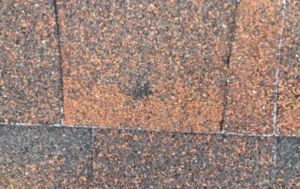
When the storm hit, Josh was at a rodeo at Canterbury. Friends who live in the neighborhood started texting him photos of the hailstones piling up. The first thing homeowners told him: the hail was big enough and hard enough to dent their vehicles. That detail matters. When hail is dense enough to dent a car, it's usually dense enough to damage a roof too.
On the way home through New Brighton, which caught smaller hail. There was so much of it that, where it washed downhill and pooled, it sat about a foot thick. A snowdrift made of hailstones. Josh has been doing this since the '90s and hadn't seen that exact thing before.
Consistent in the swath, but different block to block
Over the following days, Josh inspected roofs in Roseville, Saint Anthony, and Northeast. His honest summary: the damage was consistent within the storm's swath, but it varied a lot block to block. That's normal for hail, because it travels in a line. Whether a given roof was actually harmed came down to a stack of variables: how old the shingles are, how malleable or brittle they've become, and which manufacturer made them.
One more useful detail most people never hear: hail hardness matters as much as size. This Minneapolis hailstorm ran a little under true golf-ball size. Clear hail is harder than white hail. It tends to implode on impact and bruise a roof, while softer hail can bounce off and end up on the ground. Two storms with the "same" hail size can leave very different roofs behind.
What homeowners noticed first
lmost everyone noticed the cars. Beyond that, people reported dented gutters and downspouts, trees stripped of leaves, and shredded flower beds. What very few homeowners noticed was their roof, and that's the catch. Most people aren't trained to spot hail damage on shingles. On a storm this size, you often can't see it from the ground at all.
Here's how varied it was in real life. On a couple of roofs Josh installed three years ago in the same area, he found only a hit or two, not enough to warrant a claim. But on a roof he put on back in 2019, one he didn't expect to find anything on, there was enough damage that he recommended the homeowner call their adjuster. Even after 30 years, the roof surprised him. That's exactly why a real inspection beats a guess.
"My neighbor had damage, but I'm not sure about my house"
This is the most common question after a storm like this. The answer is reassuringly simple. If your neighbor has confirmed damage, there's a good chance your shingles were in a similar situation, so it's worth a look. You might also have newer shingles, or some other circumstance that spared you. If so, we'll just tell you that. Either way, you end up with an answer instead of a worry.
A few things worth knowing:
- You can't see this kind of damage from the ground: and it's tough to spot even with a drone. When we find bruised spots, we circle them in chalk so they show up clearly in the photos.
- A loud storm with "nothing obvious" doesn't mean you're fine. Your shingles can be compromised even when the vents and visible surfaces look untouched. We'd never tell anyone "no damage" based on a look from the yard.
- Damage doesn't always leak right away. Hail knocks the protective granules loose and bruises the mat underneath. That can quietly shorten a roof's life and show up later, after sun, heat, and a freeze-thaw winter or two.
A calm, honest next step
If you were in the path, the smart move is due diligence, not panic, and definitely not a rushed decision. Have someone who knows roofs take a real look. If you've got a friend in construction, start there. Ideally, you call a local, licensed, insured roofer who has actually examined hail damage, repaired it, and worked alongside insurance adjusters.
And a word of caution: storm chasers are already in these neighborhoods. If a company is sending people to knock on your door (often young crews working a list of recently hit streets), that tells you something about how they do business. There's no need for it. You can find a reputable local contractor on your own terms, when you're ready.
If your roof checks out clean, that's the best news, and we'll say so plainly. If it doesn't, you'll have clear documentation and a calm explanation of your options before you decide anything.
Were you in the June 19 Minneapolis hail storm path?
ight Away Construction offers a free, no-pressure roof inspection across Saint Anthony, Roseville, Columbia Heights, Fridley, Falcon Heights, Little Canada, Northeast Minneapolis, north St. Paul, and Maplewood. We're local, based right here at 2917 Silver Lake Court NE, licensed (MN #BC630708), and we've spent three decades on Twin Cities roofs.
Call 612-255-9605 to schedule, or learn more at rightawayco.com. Done the right way. Right away.
Want to understand what hail actually does to a roof and how to check yours? Read Hail Damage to a Roof: How to Spot It, Document It, and What to Do Next. And if you're weighing a claim, see Filing a Hail Damage Roof Insurance Claim in Minnesota.
Sources: National Weather Service (weather.gov), Minnesota DNR (dnr.state.mn.us), NOAA Storm Prediction Center (spc.noaa.gov), Bring Me The News, Star Tribune, FOX 9.